Description
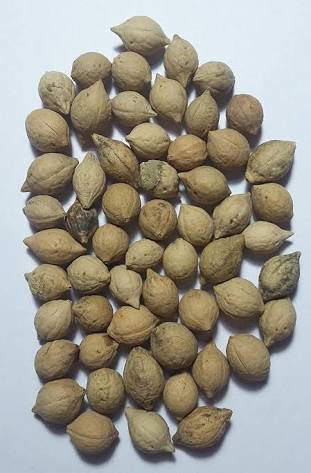
Putrajeevak Beej or seeds (Putranjiva Roxburghii or Drypetes Roxburghii) are used in the treatment of female and male infertility. The roots are also used for similar purposes.
Putrajeevak Beej or seeds are used for female infertility treatment in ayurveda. It strengthens the uterine musculature and helps a woman to get pregnant. According to ayurveda, it has an effect on the reproductive system, especially on uterus and ovaries in women and testes in men.
The main action of Putrajeevak is to strengthen these structures and improve the functions of these organs. It is also helpful in the treatment of habitual abortion (recurrent miscarriage).
In addition, it also has aphrodisiac and spermatogenic actions, so it is beneficial in male impotence and infertility. It induces spermatogenesis, improves the total sperm count and increases the count of healthy sperms in the semen.
Putrajeevak Beej provides nourishment to the body, especially to the organs of male and female reproductive system. It reduces constipation, excessive thirst, physical weakness or debility, intestinal gas and burning sensation. It improves eyesight, immunity and physical strength and endurance.
Putrajeevak Beej has following healing properties.
- Uterine tonic
- Ergogenic
- Aphrodisiac
- Spermatogenic
- Antioxidant
- Analgesic
- Anti-inflammatory
- Antacid
- Antidote of snake bites
- Carminative
Putrajeevak seeds and Shivlingi seeds together having following medicinal properties:
- Female infertility
- Recurrent Miscarriage or recurrent pregnancy loss (RPL)
- Male infertility due Oligospermia
- Impaired spermatogenesis
- Asthenozoospermia (asthenospermia) – reduced spermatic motility
- Teratospermia (teratozoospermia) – defective or abnormal spermatic morphology
- Defective quality of spermatozoa
- Idiopathic oligoasthenoteratozoospermia
- Constipation
- Excessive thirst
Generally, Putrajeevak seeds and Shivlingi Seeds are advised to taken together. If you have symptoms of increased Pitta Dosha, then Shivlingi may not be suitable for you. If Shivlingi is required, then Shivlingi should be taken in minimum dose and Putrajeevak should be taken in maximum dose and both should be taken with milk.
Shivlingi is best for patients that have increased or aggravated Kapha symptoms like discharges of excess mucus, laziness, excessive salivation, drowsiness, the sweet or salty taste of mouth, and feeling of heaviness in the abdomen, edema, excessive sleep, numbness or rigidity in the body. In such cases, Shivlingi should not be taken with milk; water is a best suitable adjuvant in aggravated Kapha Dosha.